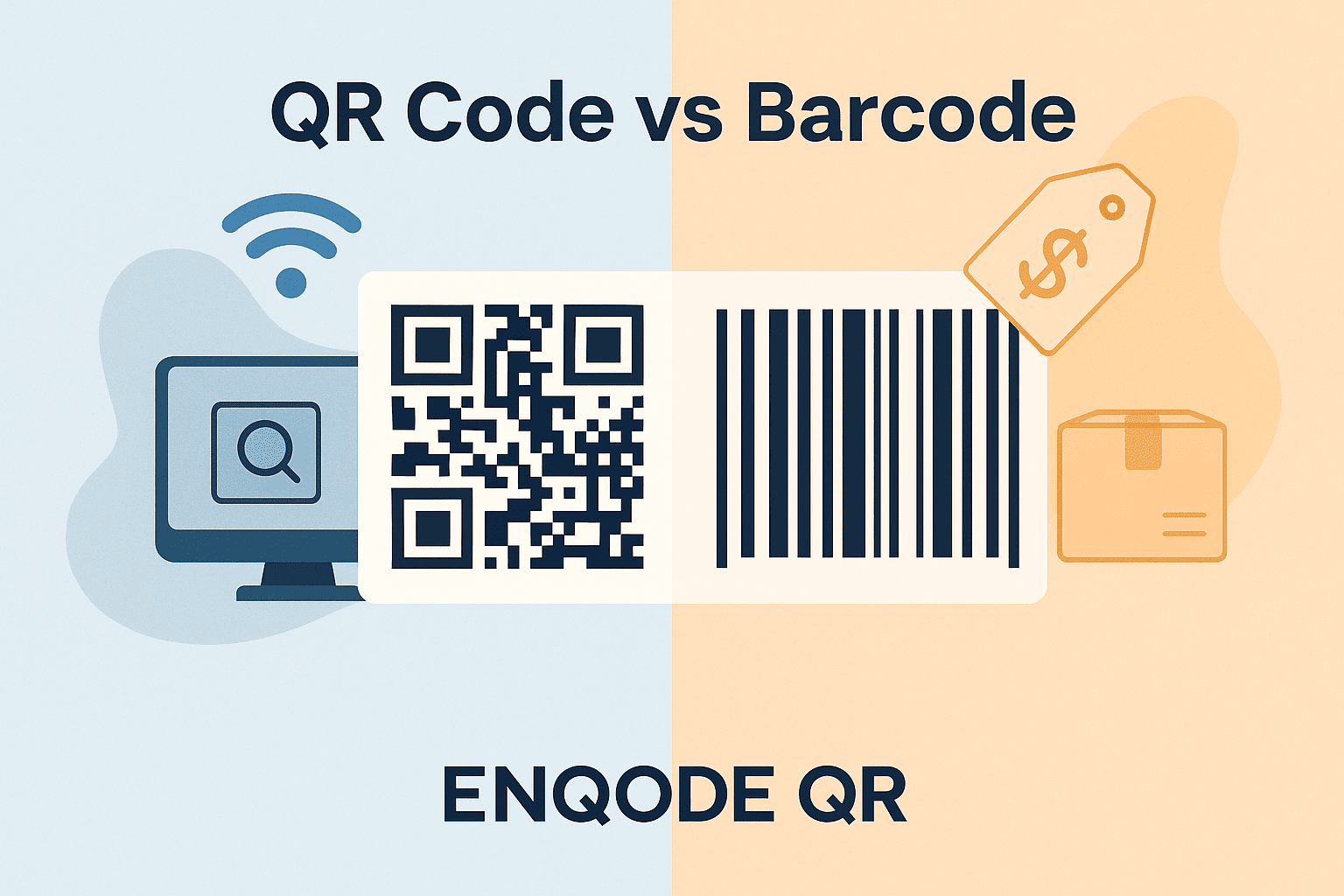

The QR code was invented in 1994 by Masahiro Hara, a Japanese engineer working at Denso Wave, to overcome the limitations of traditional barcodes used in manufacturing. Originally designed to track automotive components more efficiently, the QR code introduced a faster and more reliable way to store and retrieve large amounts of data. Over time, this invention moved beyond factory floors and became a globally adopted technology that now supports modern digital interactions and business workflows.
Who Invented the QR Code
The QR code was invented in 1994 by Masahiro Hara, an engineer at Denso Wave, a company closely associated with the Japanese automotive industry. At the time, Hara was focused on improving internal manufacturing processes where traditional barcodes were no longer sufficient for handling complex data requirements.
The invention was not intended for consumer use or marketing purposes. Instead, it was created to solve efficiency problems inside production environments where speed, accuracy, and reliability were critical. This practical origin is one of the reasons QR codes have remained useful decades after their invention.
Today, the same foundational concept created by Hara supports everything from logistics systems to modern QR Code Generator for Business platforms used worldwide.
The Background of Barcode Technology Before QR Codes
Before QR codes existed, industries relied heavily on one dimensional barcodes to identify and track products. These barcodes were effective for basic retail operations but struggled to keep up with the growing complexity of industrial supply chains.
Traditional barcodes could only store limited numeric data and required precise scanning angles. In manufacturing settings, this often resulted in scanning delays and errors, especially when labels were damaged or placed on curved surfaces.
As industries expanded and digitized, the demand for a more advanced data encoding system grew. This gap laid the groundwork for innovations that would later influence not only industrial tracking but also the development of tools like QR Code Types that support diverse data formats today.
Why the QR Code Was Designed
The QR code was designed to address three major shortcomings of earlier barcode systems. The first was data capacity. Manufacturers needed a way to store significantly more information in a compact space without increasing label size.
The second challenge was scanning speed. Production lines required instant recognition without manual alignment. The QR code solved this by using a square matrix structure that could be detected quickly from any orientation.
The third problem was durability. QR codes introduced error correction, allowing them to remain readable even when partially damaged. This reliability later became a key factor in their adoption across industries and is still a core reason why businesses prefer Dynamic QR Code Generator solutions for long term usage.
Masahiro Hara and the Denso Wave Team
Although Masahiro Hara is credited as the inventor of the QR code, the development process was highly collaborative. Engineers at Denso Wave worked together to test layouts, improve scanning accuracy, and refine error correction mechanisms.
Hara often cited inspiration from the board game Go, where information is distributed across a grid rather than a single line. This idea influenced the QR code’s two dimensional structure and helped differentiate it from earlier barcode designs.
Denso Wave’s emphasis on long term innovation rather than short term profits also played a crucial role. This mindset later influenced decisions that allowed QR code technology to be used freely across industries, including modern Online QR Code Generator platforms.
The First QR Code and Early Testing
Early versions of the QR code went through extensive testing in controlled industrial environments. Engineers focused on ensuring that codes could be scanned accurately even at high speeds and under less than ideal conditions.
One of the most important design breakthroughs was the use of position detection patterns placed at three corners of the code. These markers allowed scanners to instantly recognize orientation, eliminating the need for precise alignment.
Through repeated testing, QR codes proved capable of maintaining readability even when a portion of the code was obscured. This resilience later made QR codes suitable for public facing use cases and long term deployments supported by Bulk QR Code Generator systems.
From Patent to Public Domain
Although Denso Wave held the patent for QR code technology, the company chose not to enforce exclusive rights. Instead, QR codes were made freely available for public use.
This decision removed barriers to adoption and allowed developers and businesses worldwide to integrate QR codes into their systems without licensing restrictions. As a result, QR codes spread rapidly across industries and regions.
The open nature of the technology is one of the reasons QR codes became a global standard and continue to power modern solutions such as Free QR Code Generator tools used by individuals and organizations alike.
Key Milestones in the History of QR Codes
The history of QR codes includes several defining milestones that shaped their global adoption. After their invention in 1994, QR codes were quickly adopted within Japanese manufacturing environments.
In the early 2000s, QR codes were formally standardized, which allowed them to be used consistently across different systems and devices. This standardization marked the beginning of international recognition.
A major shift occurred when smartphones began integrating camera based scanning features. This change transformed QR codes from an industrial tool into a widely accessible digital gateway and laid the foundation for today’s Best QR Code Generator platforms.
How QR Codes Became Global
Japan was the first country to adopt QR codes at scale, largely due to early mobile phone integration. Consumers became accustomed to scanning codes for information, downloads, and digital access.
Outside Japan, adoption was slower until mobile operating systems introduced native QR scanning capabilities. Once scanning became effortless, QR codes gained widespread acceptance across businesses, governments, and institutions.
This global shift enabled QR codes to evolve into a universal interface between physical and digital spaces, supporting use cases now commonly associated with QR Code Generator with Analytics tools.
The Role of Japan in QR Code Standardization
Japan played a pivotal role not only in inventing QR codes but also in ensuring their standardization and reliability. Clear technical specifications allowed QR codes to be read accurately across different platforms and devices.
This emphasis on consistency helped build trust in QR code technology and encouraged adoption beyond industrial environments. International organizations were more willing to adopt a system that had already proven its stability and scalability.
Standardization ensured that QR codes could continue evolving without fragmenting into incompatible formats, a principle still reflected in modern Custom QR Code Generator solutions.
How QR Codes Evolved Over Time
While the original QR code structure has remained largely unchanged, its applications have expanded dramatically. Early QR codes stored static information that could not be updated once printed.
Advances in software infrastructure later enabled more flexible implementations where destinations could be updated without altering the physical code. This evolution increased the longevity and practicality of QR codes across many use cases.
The adaptability of QR codes highlights the strength of the original invention and explains why they remain relevant decades later.
The Lasting Impact of the QR Code Invention
The invention of the QR code represents a rare example of an industrial solution achieving universal relevance. What began as a manufacturing efficiency tool has become an essential part of modern digital communication.
QR codes continue to enable seamless access to information while remaining simple, reliable, and scalable. Their continued use across industries underscores the lasting impact of Masahiro Hara’s original design.
Today, QR codes are deeply integrated into digital ecosystems and continue to support innovation across platforms built around the QR Code Generator for Business model.
Frequently Asked Questions
- Who invented the QR code?
The QR code was invented in 1994 by Masahiro Hara, a Japanese engineer working at Denso Wave.
- Why was the QR code invented?
The QR code was created to overcome the limitations of traditional barcodes in industrial manufacturing, especially the need to store more data and scan it faster.
- Is the QR code patented?
Denso Wave holds the patent for QR code technology but chose not to enforce exclusive rights, allowing QR codes to be used freely worldwide.
- Was the QR code originally meant for consumers?
No, QR codes were originally designed for internal industrial use, particularly for tracking automotive components.
- Why did QR codes become popular globally?
QR codes became widely popular after smartphones added built in camera scanning, making them easy to use for everyday digital access.
Conclusion
The QR code was invented in 1994 by Masahiro Hara at Denso Wave to address real world challenges in industrial manufacturing. Through thoughtful design, open accessibility, and global standardization, QR codes evolved into a universally trusted technology. Understanding their history provides valuable insight into why QR codes remain relevant and widely used today.