QR codes and barcodes are both used to store and retrieve information, but they differ significantly in how much data they can hold, how they are scanned, and where they are best used. While barcodes remain useful for simple identification tasks, QR codes offer greater flexibility, data capacity, and real world adaptability. This guide explains the key differences between QR codes and barcodes and helps you decide which one is right for your use case.
What Is a Barcode
A barcode is a machine readable code that stores information in the form of parallel lines with varying widths and spacing. These lines represent numeric or alphanumeric data that can be read using a barcode scanner.
Traditional barcodes store information in one direction only, which limits how much data they can contain. They are widely used in retail, inventory management, and logistics for basic product identification.
Barcodes are simple, cost effective, and reliable for tasks that require quick identification rather than detailed data access.
What Is a QR Code
A QR code is a two dimensional code that stores information in a square grid of black and white modules. Unlike barcodes, QR codes store data both horizontally and vertically, allowing them to hold significantly more information.
QR codes can encode website links, files, contact details, messages, and more. When scanned using a smartphone or QR scanner, the encoded content opens instantly.
For a beginner friendly explanation, What Is a QR Code The Complete Beginners Guide provides a detailed overview of how QR codes work and where they are used.
A Brief History of Barcodes and QR Codes
Barcodes were introduced in the mid twentieth century and became widely adopted in retail and logistics due to their simplicity. They helped standardize product identification and automated checkout systems.
QR codes were developed later to overcome the limitations of barcodes. They were designed to store more data, scan faster, and remain readable even when partially damaged.
This evolution reflects changing technological needs, from basic identification to interactive digital access. A deeper look into this transition is covered in Who Invented the QR Code History of QR Code Technology.
QR Code vs Barcode A Side by Side Comparison
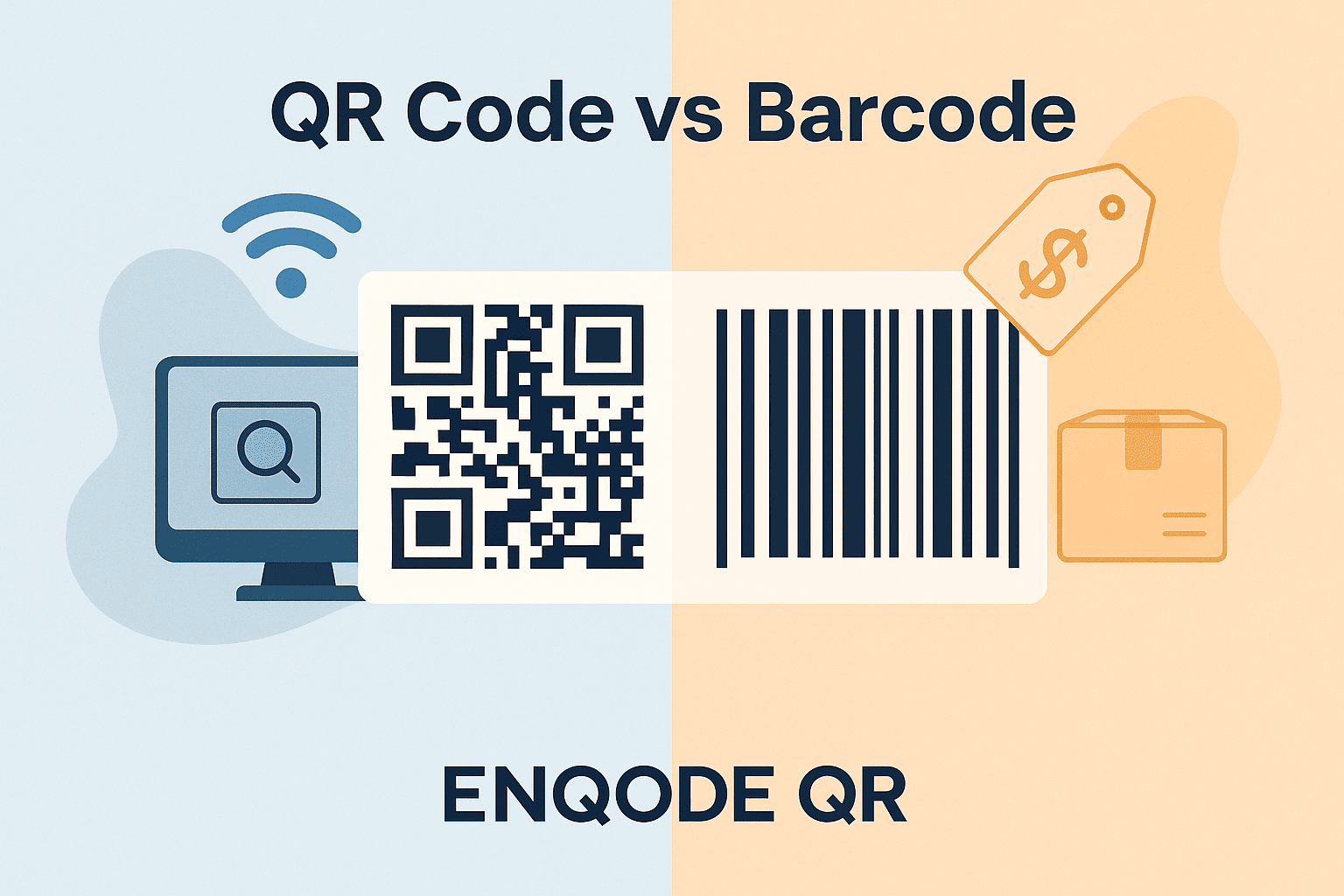
The table below highlights the most important differences between QR codes and barcodes.
| Feature | Barcode | QR Code |
|---|---|---|
| Data capacity | Very limited | High |
| Data direction | One dimensional | Two dimensional |
| Scanning angle | Requires alignment | Can be scanned from any angle |
| Error correction | Not available | Available |
| Device support | Dedicated scanners | Smartphones and scanners |
| Use cases | Product identification | Digital access and interaction |
This comparison shows why QR codes are often chosen for modern use cases that require flexibility and richer data.
Limitations of Traditional Barcodes
Traditional barcodes are limited by their one dimensional structure. They cannot store large amounts of information and usually require access to a backend system to retrieve meaningful data.
Barcodes are also sensitive to damage. If the lines are scratched or obscured, scanning may fail entirely. They require precise alignment, which can slow down scanning in fast paced environments.
These limitations make barcodes less suitable for use cases that involve digital interaction or evolving content.
When Barcodes Still Make Sense
Despite their limitations, barcodes are still useful in certain scenarios. They work well for simple identification tasks where only a product number or reference is needed.
Barcodes are commonly used in retail checkout systems, inventory tracking, and warehouse management. Their simplicity makes them efficient and cost effective for large scale operations.
In environments where detailed information or interaction is not required, barcodes remain a practical choice.
Real World Examples of Barcodes and QR Codes
Barcodes are commonly found on retail products, shipping labels, and inventory tags. They help businesses identify items quickly during checkout or stock management.
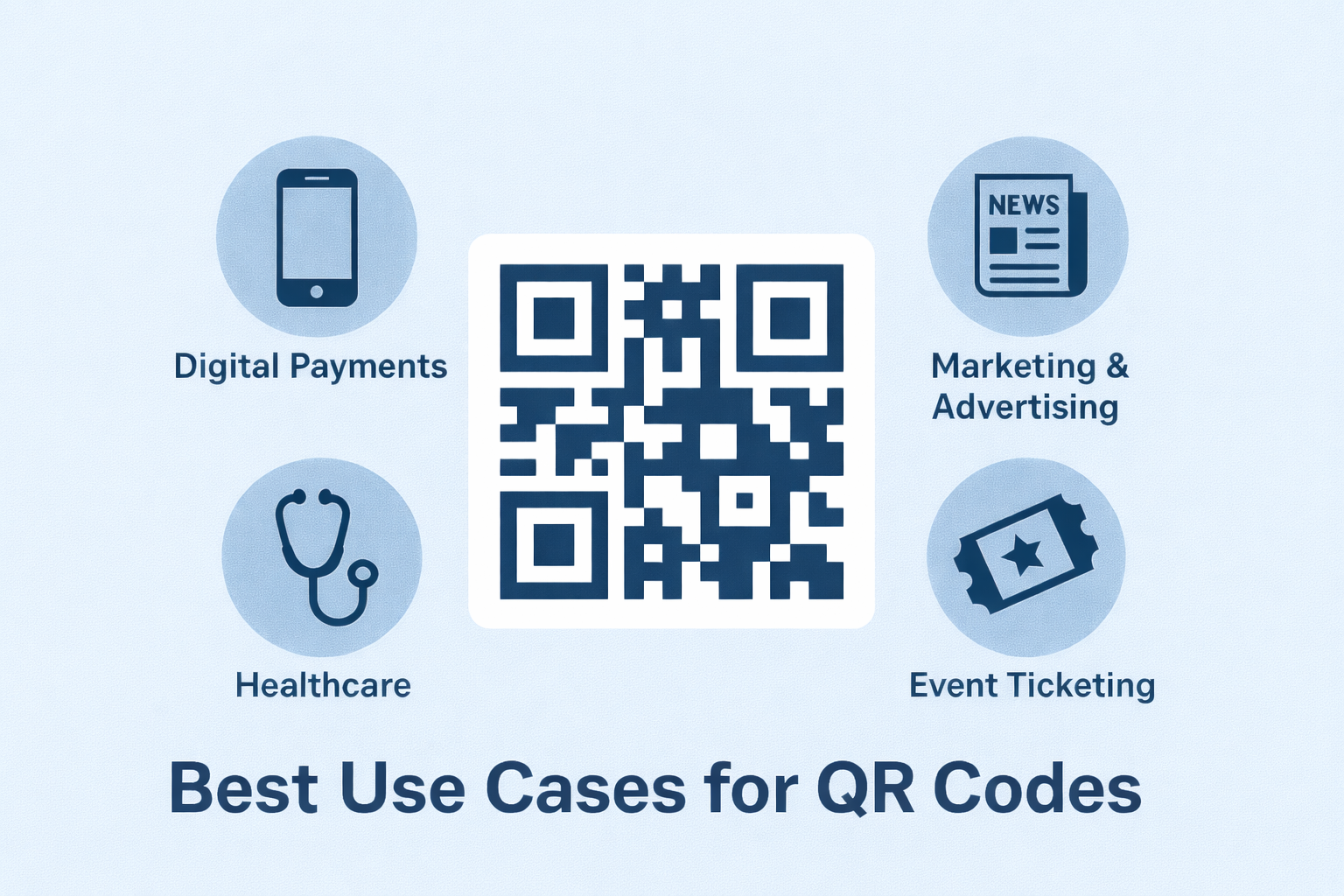
QR codes are used in marketing materials, product packaging, menus, event tickets, and digital payments. They allow users to access content instantly with a scan.
Many modern businesses rely on QR Code Generator for Business platforms to manage QR codes across multiple touchpoints efficiently.
Why QR Codes Are Becoming More Popular
QR codes are becoming more popular because they provide a simple way to connect physical objects with digital experiences. A single scan can open a website, download a file, or display information instantly.
The widespread availability of smartphones with built in QR scanning has removed barriers to adoption. QR codes also support analytics and content updates, making them more flexible than barcodes.
This growing adoption is closely tied to the rise of Dynamic QR Code Generator solutions that support tracking and content management.
Which One Should You Use and When
Choosing between a QR code and a barcode depends on your needs. If you only need to identify a product or item internally, a barcode may be sufficient.
If you want to share information, enable interaction, or connect users to digital content, QR codes are the better option. They offer flexibility, higher data capacity, and broader device support.
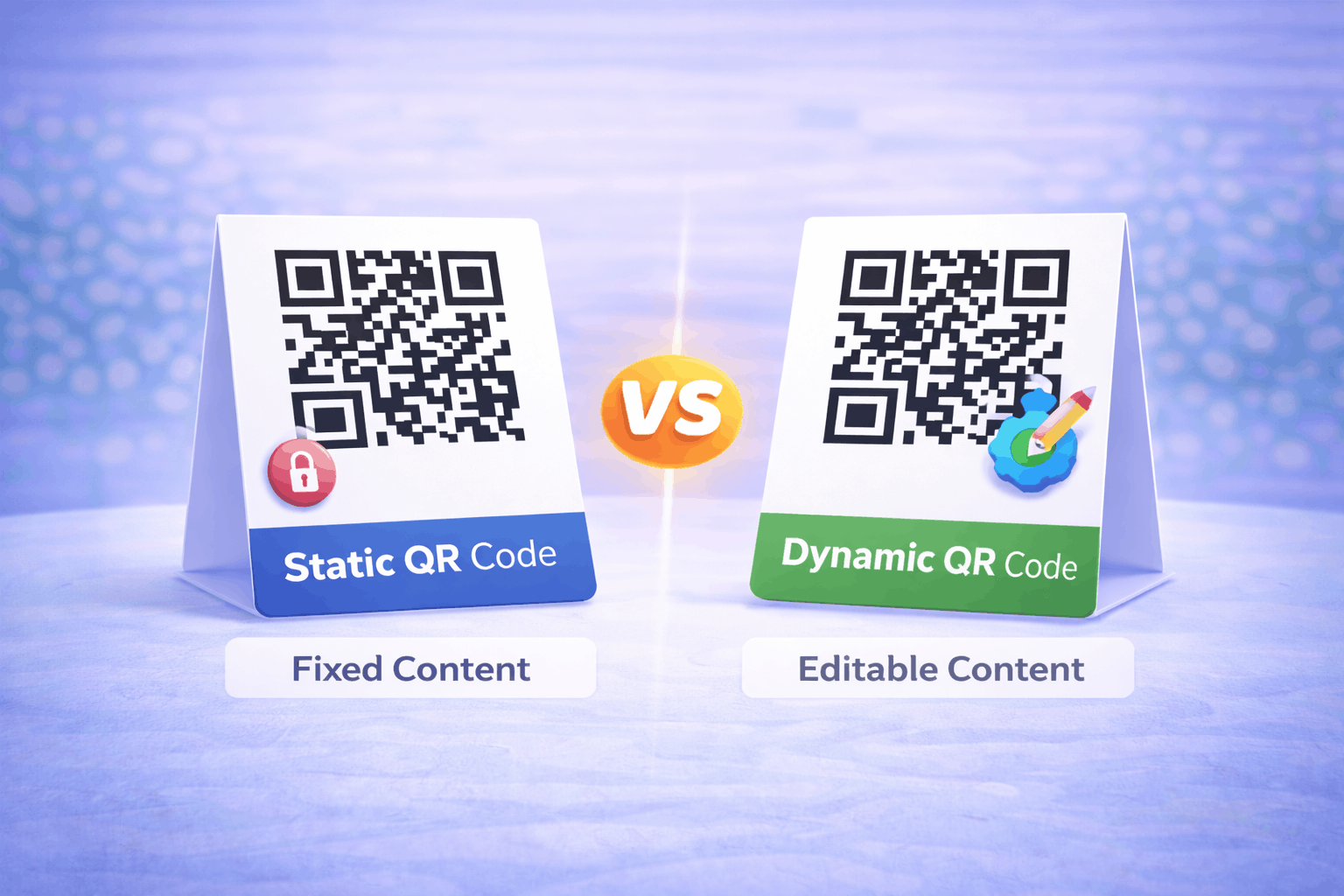
For scenarios that require updates or tracking, dynamic QR codes provide even greater advantages. The comparison in Types of QR Codes Static vs Dynamic What's the Difference helps clarify these choices further.
Frequently Asked Questions
- What is the main difference between a QR code and a barcode?
The main difference is data capacity and structure. Barcodes store limited data in one direction, while QR codes store much more data in two dimensions and support digital interaction.
- Can QR codes replace barcodes completely?
QR codes can replace barcodes in many use cases, especially those involving digital access. However, barcodes are still widely used for simple identification tasks.
- Do QR codes require internet access to work?
Scanning a QR code does not require internet access, but accessing online content linked by the QR code does.
- Are QR codes more secure than barcodes?
QR codes themselves are not inherently more secure, but they support features like dynamic redirects and controlled destinations that allow safer usage when managed properly.
Conclusion
QR codes and barcodes serve different purposes despite appearing similar at a glance. Barcodes remain useful for basic identification, while QR codes enable richer digital experiences and flexibility. By understanding their differences, limitations, and ideal use cases, you can choose the right technology for your specific needs.