QR codes help real estate professionals share property details, capture leads, and provide instant access to listings, locations, and contact information. This guide explains how QR codes are used across real estate marketing and operations, the benefits they offer, common use cases, and how to create QR codes for property listings and related needs. It also covers best practices and long-term considerations for using QR codes effectively in real estate.
Why QR Codes Matter in Real Estate
Real estate decisions rely heavily on timely access to information. Buyers want property details instantly, sellers expect wider exposure, and agents need efficient ways to manage inquiries and follow-ups. QR codes help bridge physical and digital touchpoints by allowing prospects to access property information, virtual tours, contact details, or inquiry forms with a simple scan. Instead of relying on printed brochures or manual follow-ups, QR codes create a direct path from offline marketing materials to digital content. This makes them especially useful for property signage, open houses, print ads, and brochures where space is limited but information needs are high.
Key Benefits of Using QR Codes in Real Estate
QR codes simplify how property information is shared and accessed. They reduce dependency on printed materials while ensuring prospects always see the latest details. Updates to listings, pricing, or availability can be reflected instantly without replacing signage. QR codes also help realtors capture leads more efficiently by linking directly to inquiry forms or contact pages. From a buyer perspective, QR codes reduce friction by removing the need to type URLs or search for listings manually. For agents managing multiple properties or locations, QR codes provide a scalable way to distribute information consistently across channels.
Practical Use Cases of QR Codes in Real Estate
a) Property listings and virtual tours
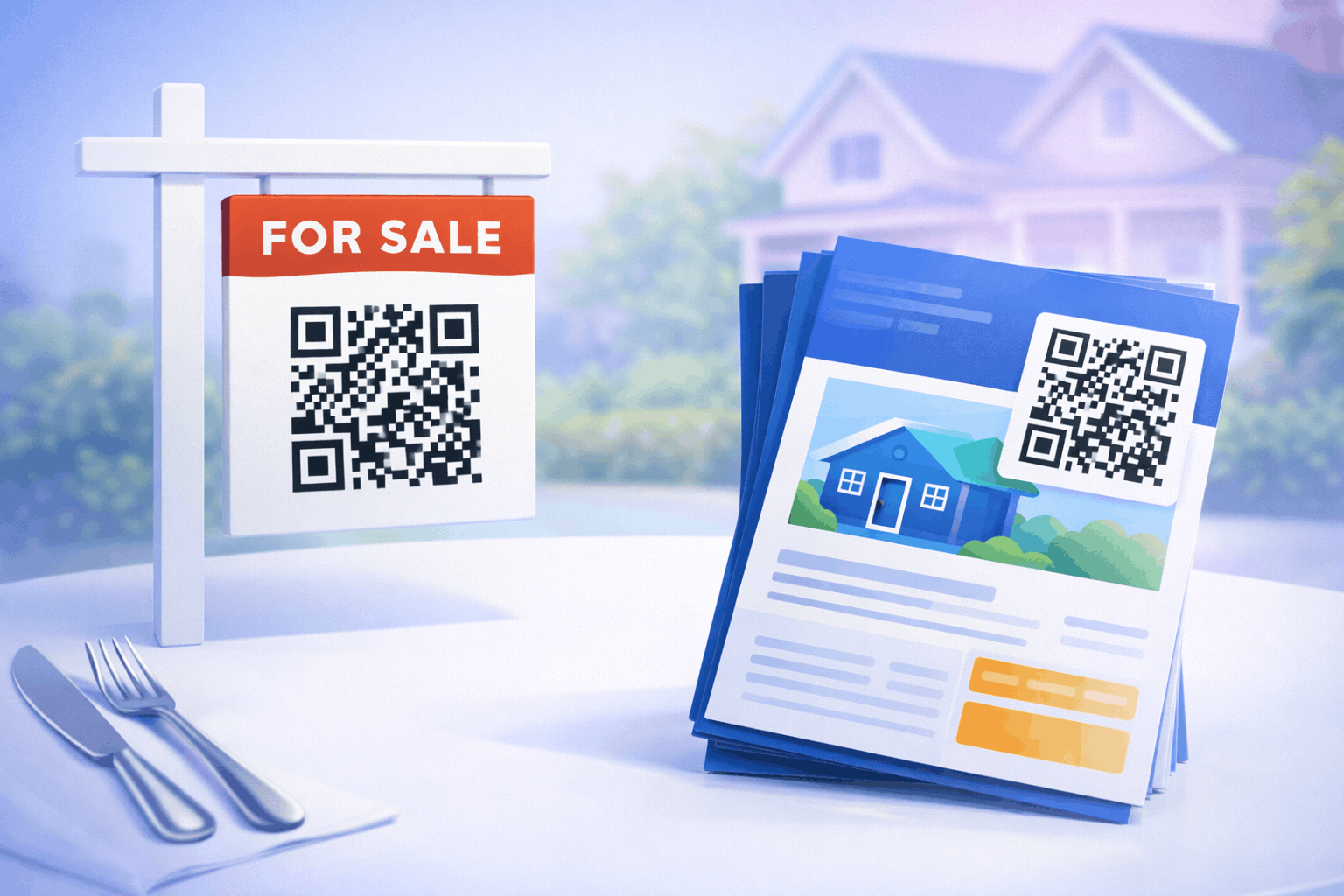
Property listing QR codes are commonly placed on yard signs, brochures, and advertisements to give buyers instant access to listing pages. When scanned, these QR codes can open detailed property descriptions, image galleries, floor plans, or virtual tours. This allows prospects to explore properties at their own pace, even outside business hours, and helps agents qualify interest before in-person visits.
b) Open house information and brochures
During open houses, QR codes can replace printed brochures by linking to digital property information. Visitors can scan a QR code to view property details, amenities, or disclosures on their phone. This reduces printing costs and ensures visitors leave with access to complete information even after the event ends.
c) Contact sharing with vCard QR codes
Contact sharing is essential in real estate networking. vCard QR codes allow agents to share their contact details instantly. By scanning the QR code, prospects can save phone numbers, email addresses, and company information directly to their device. This is more reliable than business cards, which are often misplaced or forgotten.
d) Location and map access
Location QR codes help buyers navigate to property sites without manual searching. Scanning a location QR code opens the property address in a map application, making it easier for visitors to find listings or open house venues. This is particularly useful for properties in unfamiliar neighbourhoods or large developments.
e) Lead capture and inquiry forms
QR codes can link directly to inquiry or lead capture forms, allowing interested buyers to submit their details quickly. These QR codes can be placed on signage, brochures, or digital ads to collect inquiries in real time. This helps agents respond faster and manage leads more efficiently.
How to Create a QR Code for Real Estate (Step by Step)
Creating a QR code for real estate follows a simple three-step process and can be applied to property listings, contact sharing, locations, or inquiry forms.
Choose your QR code type: Select the relevant option from the available QR Code Types based on your use case. For property marketing, this could include a property listing qr code, vCard QR code, location QR code, or form QR code.
Enter details or upload & Customize: Add the required information such as a property listing URL, contact details, location link, or form URL. Customize the QR code design by adjusting color's or adding a logo while maintaining good scan readability.
Download and Share: Generate the QR code, download it in your preferred format, and test it on multiple devices. Place it on yard signs, brochures, business cards, or advertisements where prospects can scan it easily.
Tools like the Enqode QR - QR Code Generator follow this same flow, making it easy to create and manage QR codes for different real estate use cases.
Static vs Dynamic QR Codes for Real Estate
Static QR codes contain fixed information that cannot be changed once created. They are suitable for use cases where the content is unlikely to change. Dynamic QR codes allow real estate professionals to update linked content without changing the printed QR code. This is especially useful for property listings where availability, pricing, or media may change. Dynamic QR codes also provide scan data, helping agents understand engagement across listings. For real estate workflows that require flexibility and updates, using a dynamic qr code generator offers long-term advantages.
Best Practices for Realtors Using QR Codes
QR codes should be clearly visible and placed where prospects naturally look, such as on property signs or brochures. Designs should maintain strong contrast and avoid excessive styling that affects scan reliability. All QR codes should be tested before deployment to ensure they open the correct content. Linked pages should be mobile-friendly since most scans happen on smartphones. Realtors should also ensure each QR code has a clear purpose, avoiding clutter or multiple QR codes in a single location without context.
Frequently Asked Questions
- Are QR codes effective for real estate marketing?
Yes. QR codes provide instant access to property information and reduce friction in lead generation, making them effective for real estate marketing.
- Can QR codes be used on outdoor property signs?
Yes. QR codes are commonly used on yard signs and work well when printed at an appropriate size and contrast.
- Do QR codes require an internet connection?
An internet connection is required to open linked content such as property listings or inquiry forms.
Conclusion
QR codes offer real estate professionals a practical way to connect offline marketing with digital property information. From property listings and virtual tours to contact sharing and lead capture, QR codes support more efficient and scalable real estate workflows. By choosing the right QR code types and following best practices, agents can improve visibility, streamline inquiries, and provide a better experience for buyers and sellers alike.